Preheat your oven to 325 degrees F. This ensures that your cheesecake will cook evenly. You want the oven nice and warm before you start baking.
Lightly grease a 9×13 baking dish with nonstick cooking spray. This helps prevent sticking, ensuring that your bars come out cleanly. Additionally, line the baking dish with heavy-duty aluminum foil, allowing the edges to overhang. This makes lifting the cheesecake out later much simpler.
Melt 12 tablespoons of unsalted butter in a large microwave-safe bowl. Once melted, add the crushed Graham crackers and 1/3 cup of granulated sugar. Stir until well combined, ensuring each crumb is coated in buttery goodness.
Transfer the mixture into the prepared pan. Using the back of a measuring cup, firmly press the crumbs down to create an even layer. This step is crucial for a solid base!
Bake the crust in the preheated oven for 14 minutes. The crust should look slightly golden and smell delightful. Remove it from the oven and allow it to cool completely.
In a mixing bowl, add 3 packages of cream cheese. Beat on medium speed until light and fluffy, which should take about 4 minutes. It’s essential to beat it well, so you avoid lumps in your filling.
Add 1 ¼ cups of granulated sugar to the cream cheese and beat for an additional 5 minutes. This will create a smooth, creamy texture that's essential for your cheesecake.
Next, mix in 3/4 cup of sour cream, ¼ cup of lemon juice, 2 teaspoons of lemon zest, and 1 tablespoon of vanilla extract. Blend until everything is well incorporated.
With the mixer still running on low, add 3 large eggs one at a time, followed by 1 egg yolk. Be careful not to overbeat, as this could lead to cracks in your cheesecake later.
Carefully pour the cheesecake mixture over the cooled crust, using a spatula to spread it evenly. It should look smooth and creamy.
Bake for 60 to 70 minutes, until the edges are set, and the center remains slightly jiggly. An instant-read thermometer inserted should read between 175°-185°F. Avoid opening the oven while baking, as it may cause cracking.
Once done, crack the oven door and let the cheesecake cool for about 15 minutes. This gradual cooling helps prevent cracks.
After cooling, transfer the pan to a cooling rack and let it cool for at least an hour before adding the lemon curd topping.
For the lemon curd, whisk together 2/3 cup of lemon juice, 1 cup of granulated sugar, 1 teaspoon of cornstarch, 4 large eggs, and 2 large egg yolks in a medium bowl until well combined. This mixture needs to be cooked.
Pour the mixture into a small saucepan and cook over medium-low heat, stirring constantly until thickened to the consistency of thick pudding. This should take about 4 to 8 minutes.
Once thickened, immediately remove from heat and stir in 6 tablespoons of butter until melted. Add 1/2 teaspoon of vanilla extract and 1/8 teaspoon of salt. Strain the curd through a fine-mesh sieve into a bowl and let it cool slightly.
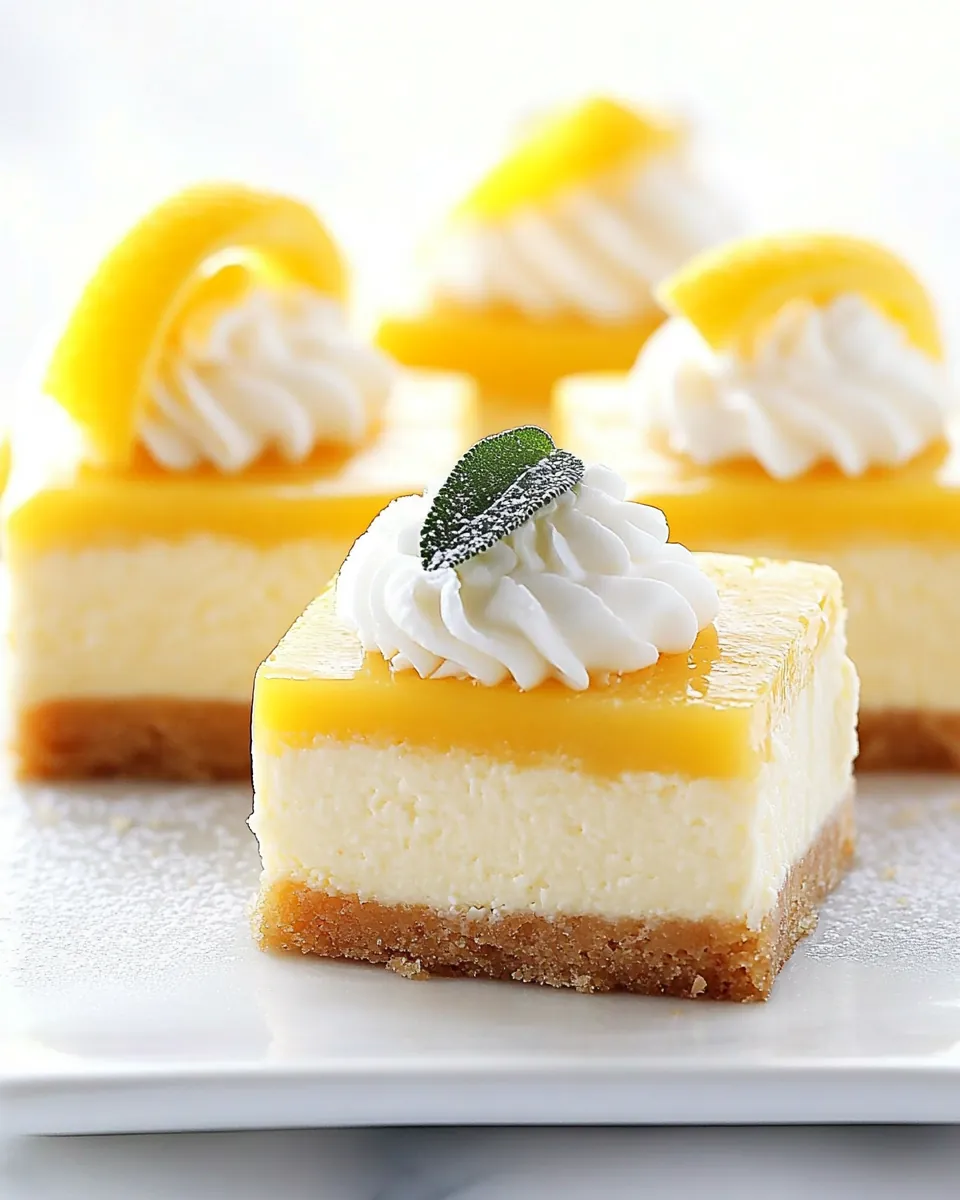
Spread the warm lemon curd over the cooled cheesecake, creating an even layer. This adds a beautiful finish and a zesty punch!
Let the cheesecake cool to room temperature for another 1 to 2 hours. Then, cover and refrigerate for at least 6 hours, but ideally overnight, to let the flavors meld.
If making stabilized whipped cream, dissolve 1 teaspoon of unflavored gelatin in 1 1/2 tablespoons of water and microwave for 10 seconds. Let it cool slightly.
In a mixing bowl, whip 1 cup of heavy cream with 3 tablespoons of powdered sugar and 1 teaspoon of vanilla extract until soft peaks form. Then, slowly pour in the gelatin mixture while mixing until stiff peaks form.
Use a piping bag to pipe the stabilized whipped cream onto the cheesecake before serving. This adds a touch of elegance!
When ready to serve, use the foil overhang to lift the cheesecake out of the pan onto a cutting board. For clean cuts, dip a knife in hot water, wipe it, and slice.