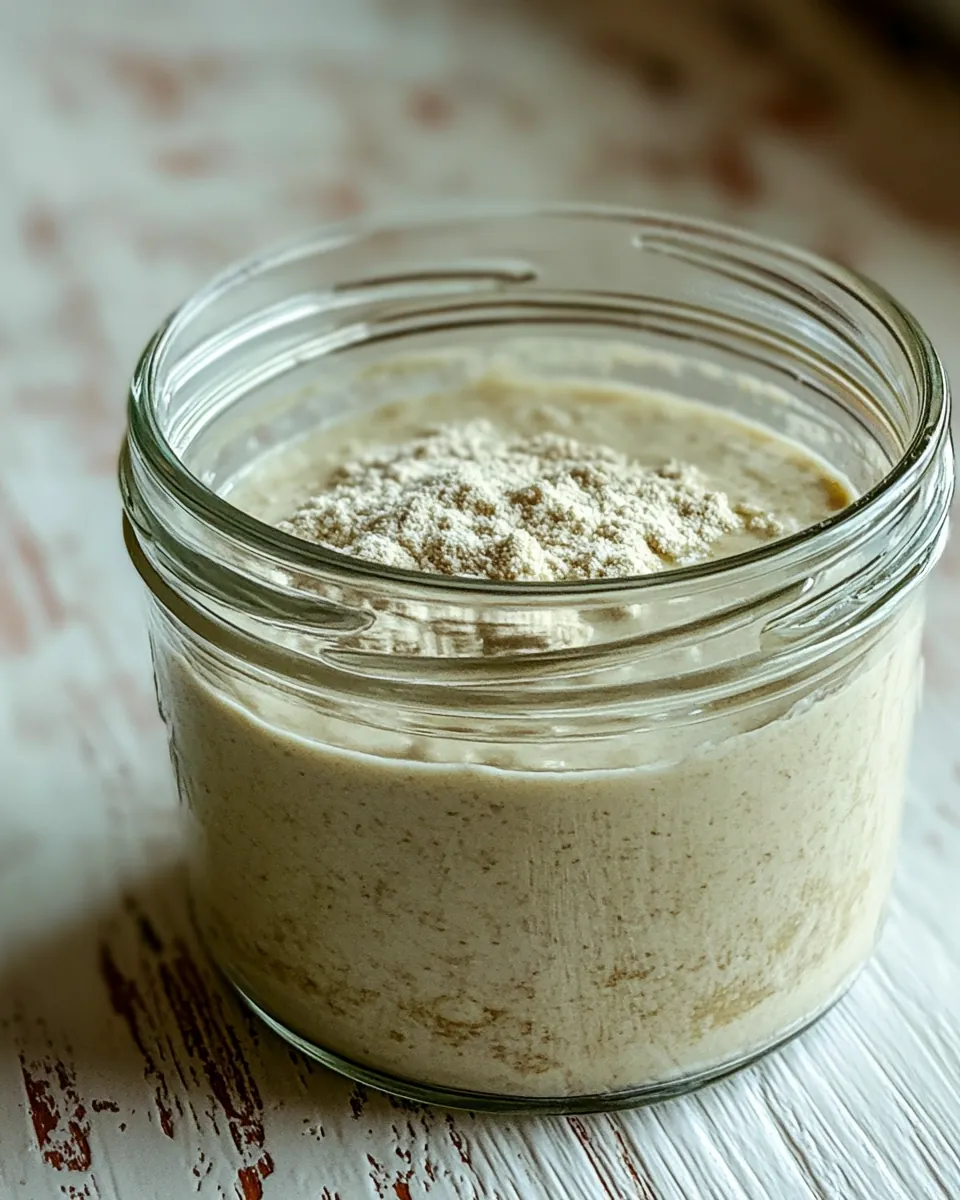
Bring Starter to Room Temperature: If your starter is refrigerated, remove it from the refrigerator a few hours or the night before to come to room temperature. If your starter is at room temperature, you’ll want to feed it daily or at least every other day to keep it bubbly and happy.
Feed the Starter: Using a kitchen scale to weigh in grams, discard all but 100 grams of your starter in your glass jar. Add 100 grams of flour and 100 grams of water and stir thoroughly with a silicone spatula to combine.
Let it Rise: Scrape down the sides of the jar, cover with a loose-fitting lid, place a rubber band on the jar to track how far the starter has risen, and let it grow at room temperature (70-75 ̊F). Once it has at least doubled in volume (4-6 hours), it is considered 'active sourdough starter' and you can use it to make sourdough recipes. Once it falls and is no longer active, you can repeat the feeding process in this step.
To Refrigerate the starter: Once you have used the amount of active sourdough starter needed for your recipe, feed the starter again using the same proportions as in the previous steps. Optional: Let it sit at room temperature for 1 hour to jump-start the process then refrigerate. Feed weekly to keep it alive.