Put water in a large pot and bring it to a boil. Once boiling, add a generous pinch of salt to enhance the flavor of the pasta.
When the water is bubbling vigorously, add the basil leaves and blanch them for less than a minute. This quick process helps brighten the color and flavor.
After blanching, drain the basil and immediately transfer it to a bowl of ice water to stop the cooking process. This will help maintain that vibrant green color.
In a blender or food processor, combine the blanched basil, pine nuts, walnut, garlic, Parmigiano Reggiano, and olive oil. Blend on high until the mixture is smooth and creamy.
Once blended, add the heavy cream and give it a quick pulse to incorporate. You should see a beautiful, silky sauce forming.
If using the potato, place the sliced potato in a large pan of salted water and bring to a boil. This step will add a delightful texture.
Meanwhile, add the fettuccine to the boiling water and cook it to al dente, which usually takes about 8 to 10 minutes. Stir occasionally to prevent sticking.
Before draining the pasta, reserve about ¼ cup of the cooking water. This starchy water will help bind the pesto to the pasta.
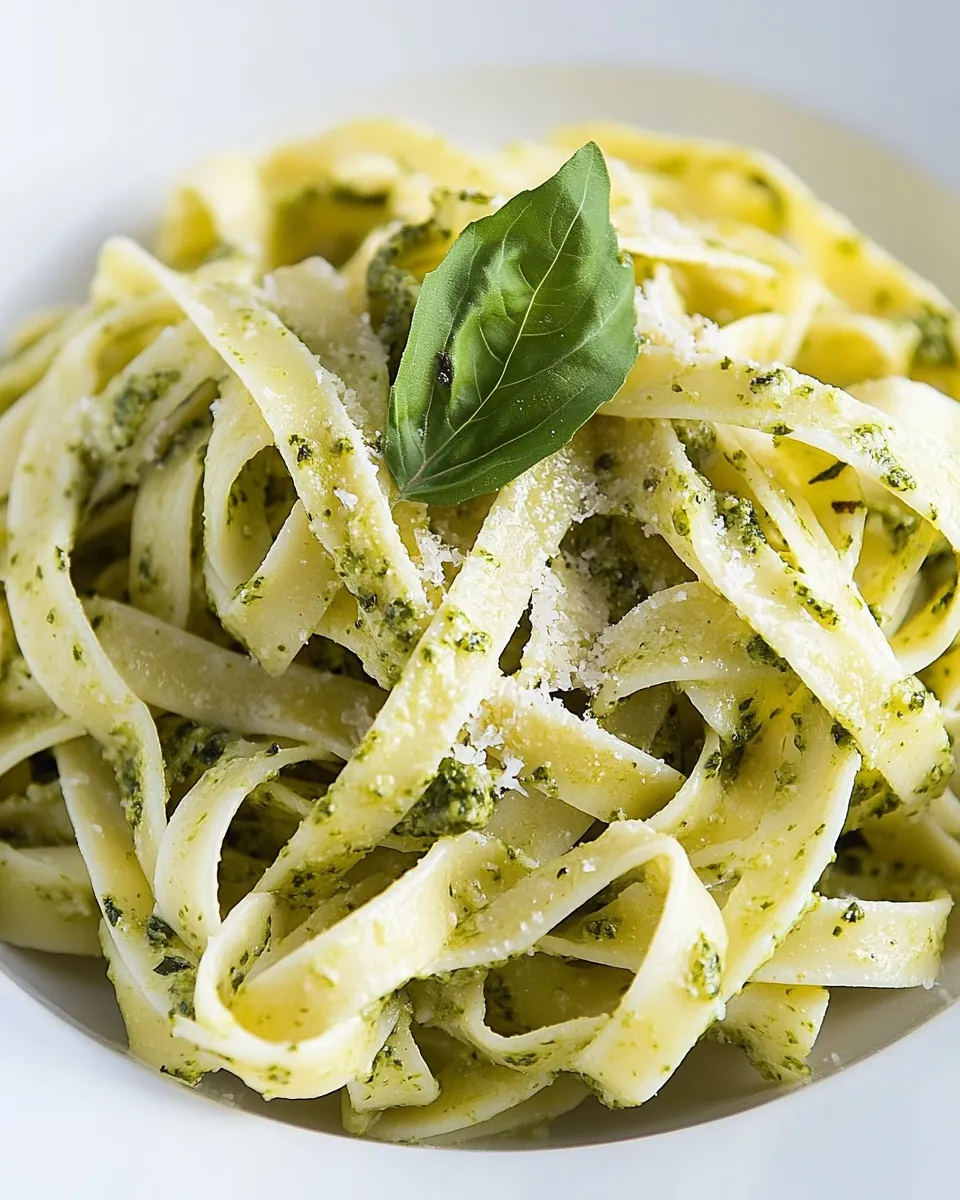
In a serving dish, place the butter and the freshly made pesto. Add the drained fettuccine and toss everything together. If it seems too thick, gradually mix in the reserved cooking water until you reach the desired consistency.
To finish, generously grate more Parmigiano Reggiano over the top. The heat from the pasta will melt the cheese slightly, creating a luscious finish to your dish.